LAGOS STATE GOVERNMENT REFUNDS 145 FORMER SUBSCRIBERS OF EGAN HOUSING ESTATE
 admin
By Our Reporter
Stakeholders in Nigeria’s labour and employment sector have called for stronger collaboration among government, employers, organised labour, professional bodies and international development partners to address employment challenges and improve workforce governance.
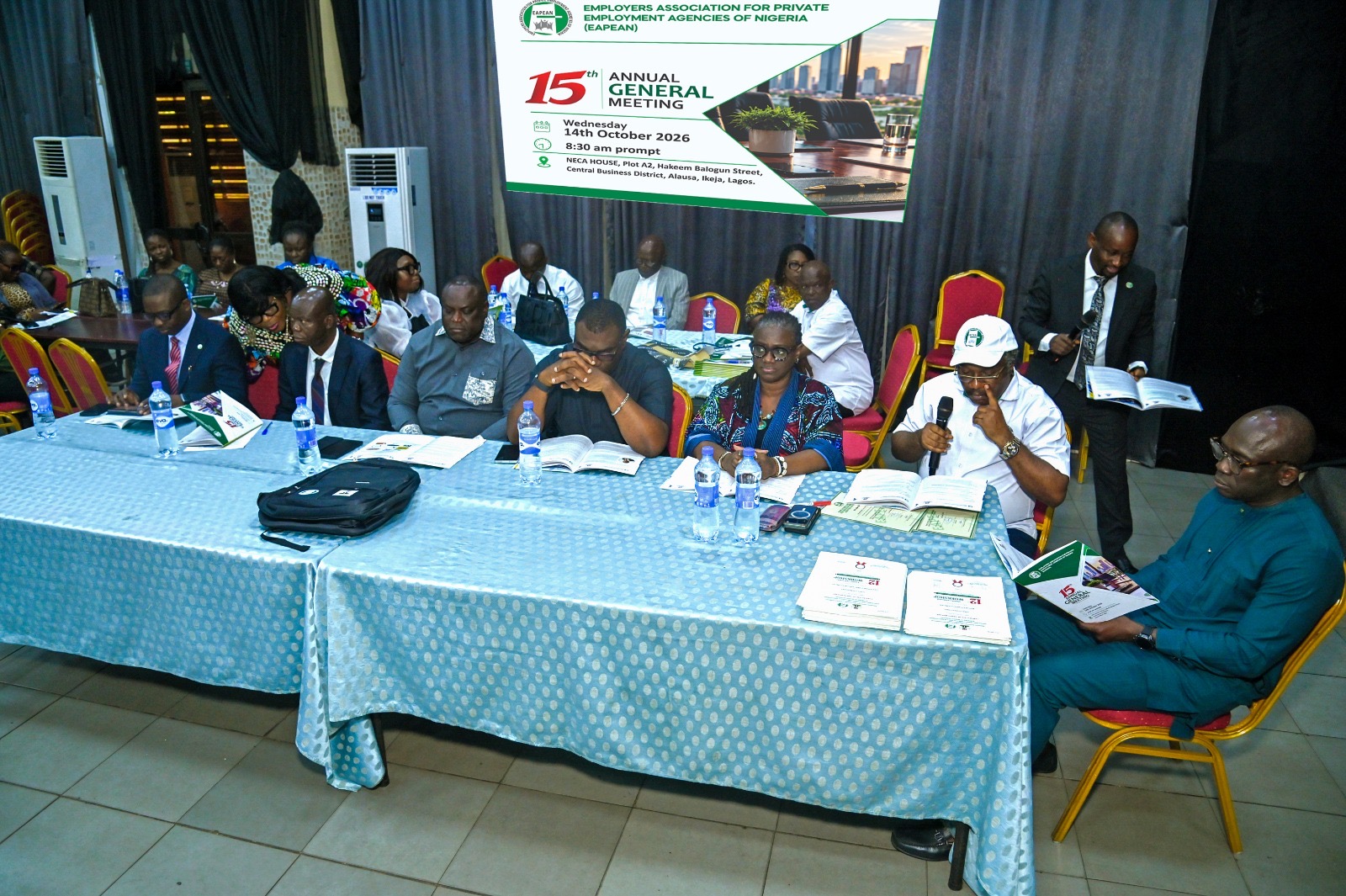
The call featured prominently at the 12th Annual National Workshop and 15th Annual General Meeting of the Employers Association for Private Employment Agencies of Nigeria (EAPEAN), held at NECA House, Lagos.
The events brought together representatives of government institutions, employers’ organisations, labour unions, international agencies and private employment businesses to discuss issues affecting recruitment, outsourcing, skills development and workers’ welfare.
EAPEAN President and Chairman of Council, Chief Nzeribe Okegbue, said collaboration was essential to building a sustainable employment ecosystem capable of supporting decent work, business productivity and national economic development.
He maintained that no single institution could independently resolve Nigeria’s employment challenges, stressing the need for coordinated policies and practical partnerships between public and private sector actors.
Okegbue said licensed private employment agencies could contribute to job creation, workforce development and improved labour-market outcomes when supported by effective regulation and constructive engagement with government.
He also emphasised the importance of ensuring that employment generation is accompanied by ethical recruitment, workers’ protection and compliance with statutory obligations.
The annual events featured goodwill messages from representatives of the Federal Ministry of Labour and Employment, the International Labour Organization (ILO), the International Organization for Migration (IOM), the International Returns and Reintegration Assistance (IRARA), the Nigeria Employers’ Consultative Association (NECA), the Chartered Institute of Personnel Management of Nigeria (CIPM) and the Nigeria Labour Congress (NLC), Lagos State Council.
The Federal Ministry of Labour and Employment was represented by Mr J.J. Akpan, Director of Employment and Wages, represented the Permanent Secretary.
Dr Vanessa Phala, Director of the ILO Country Office for Nigeria, Ghana, Liberia and Sierra Leone, was represented by Mr Austin Erameh.
NECA’s Director-General, Mr Adewale Smatt Oyerinde, was among the stakeholders represented at the gathering, alongside representatives of IOM and IRARA.
Also present were Mrs Mienye Badejo, South-West Zonal Director/State Controller of the Federal Ministry of Labour and Employment; Dr Olufemi Ogunlowo, immediate past EAPEAN president; Aderemi Adegboyega, former president; members of the National Executive Council; and the Executive Secretary of the association.
The programme featured capacity-building sessions on employment practices, human resource management and the legal responsibilities of registered organisations.
Mr Aderemi Adegboyega, Chief Executive Officer and Managing Director of Workmen and Talent Limited, said the workshop provided an opportunity for agency executives and employees to improve their understanding of human resource management, especially in relation to third-party workers.
He stressed that collaboration with the Ministry of Labour and Employment and other stakeholders was necessary to develop the workforce and improve productivity.
Mr Gbenga Odetunde, representing CIPM, also called for greater professionalism across the recruitment industry, expressing support for efforts to improve human resource practices and strengthen cooperation among industry stakeholders.
The Registrar of Trade Unions, Mr Rabiu Shuaibu, addressed participants on the constitutional and legal obligations of registered organisations, emphasising that compliance with applicable laws remained essential to effective institutional governance.
Okegbue said EAPEAN would continue engaging relevant stakeholders to improve the regulatory environment for private employment agencies, promote professional standards and strengthen the contribution of recruitment businesses to national development.
He added that the association remained committed to creating a platform through which industry operators could engage policymakers, exchange knowledge and contribute to employment policies that balance business sustainability with workers’ rights.
The annual workshop and AGM concluded with renewed emphasis on stakeholder engagement, professional development and collective action to strengthen Nigeria’s labour market and promote decent employment opportunities.